
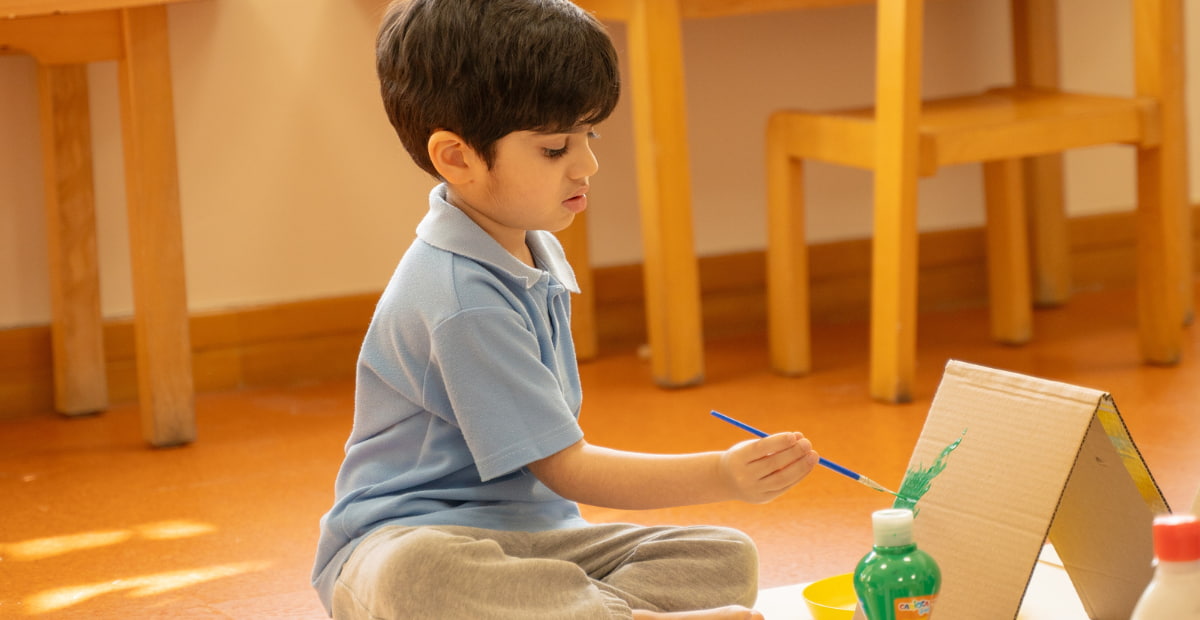
When a toddler stacks blocks for the first time or hums a nursery rhyme by heart, something extraordinary is happening. These are playful moments, but they are also key milestones. The early years form the foundation for how children think, feel, and grow. And at the heart of this foundation lies education.
Education in the early years is not about forcing children to read or count before they are ready. It is about creating the groundwork for their future by developing language, social skills, emotional awareness, problem-solving abilities, and motor coordination. Let’s explore the real impact of education on child development and why it needs to start as early as possible.
Why Early Education Matters More Than You Think
According to the Centre on the Developing Child at Harvard University, more than one million new neural connections are formed every second in the first few years of life.
That’s the brain working at full speed: processing, absorbing, and storing information. The quality of experiences a child has during this period directly affects how their brain is wired. And that’s where early education steps in; not just to teach, but to nurture, guide, and support.
Key Areas Shaped by Early Education
1. Cognitive Development
Children begin to explore the world with their senses. Education enhances that curiosity. With thoughtful guidance, children learn to recognise patterns, develop problem-solving skills, and acquire basic numeracy and literacy skills. Educational environments introduce them to cause and effect, memory skills, and decision-making from a very young age.
A study by the National Library of Medicine found that children who attend high-quality early education programmes perform better in language, maths, and cognitive skills compared to those who don’t.
2. Emotional and Social Growth
Young children are learning how to express themselves and interact with others. Structured early education helps them build empathy, confidence, and the ability to manage their emotions. At nurseries, they learn the value of sharing, taking turns, and working together.
3. Language and Communication Skills
Language develops rapidly between birth and age five. A rich early learning environment provides opportunities for storytelling, songs, role-play, and conversation, which are essential for building vocabulary, comprehension, and expressive skills.
Research from the University of Oxford confirms that children who receive early education are more likely to develop stronger communication skills, which in turn support long-term academic achievement.
4. Physical Development
Fine motor skills (like holding a pencil) and gross motor skills (like running and jumping) are essential parts of child development. In a well-designed early education setting, children engage in age-appropriate physical activities that strengthen their muscles, coordination, and balance.
How Education Builds the Foundation for Future Success
The impact of education on child development isn’t limited to just the early years. Its ripple effect extends into adolescence and adulthood. Children who attend early education programmes are:
- More likely to succeed in school
- Less likely to repeat grades
- More confident in social settings
- Better prepared for challenges later in life
UNESCO’s global research shows that early childhood education is one of the most cost-effective ways to improve long-term outcomes in health, education, and economic productivity.
Why It’s Never Too Early to Start
Some parents may wonder whether structured education is necessary for a three-year-old. But the truth is that learning begins long before school starts. A nursery setting doesn’t replace parenting. It complements it by offering a safe, enriching, and well-rounded environment where development can flourish.
From understanding routines and building friendships to exploring their interests and expressing their thoughts, children grow in remarkable ways when they’re supported by early educators who know how to unlock their potential.
The Emirates British Nursery Approach
At Emirates British Nursery, we recognise that the early years are a one-time opportunity. Our British EYFS curriculum is designed not just to meet developmental needs but to inspire a love for learning. Every day, our children engage in play-based learning, guided discovery, and nurturing interactions.
Our certified and professional teachers observe, understand, and support each child’s journey, celebrating small wins, guiding big ideas, and building confidence along the way. We provide a strong emphasis on emotional well-being, communication, and creativity in a balanced environment that prepares children not just for school, but for life.
Final Thoughts
The impact of education on child development is undeniable. What a child experiences in their first five years sets the pace for everything that follows. And while love and care at home provide the emotional anchor, quality early education adds the tools children need to thrive in a complex world.
When it comes to giving children the best start in life, there is no substitute for early years education and the nurturing and inspiring benefits to children who access it.
This blog was written by a third-party


